

If you have ever wondered whether Labeller or Labeler is the correct spelling, you are not alone. Both forms appear in English, but the preferred spelling depends mainly on the language variety and regional spelling conventions you are following.
The difference is simple: Labeler is generally preferred in American English, while Labeller is commonly used in British English and several other varieties that follow British spelling standards.
Is It Labeller or Labeler?
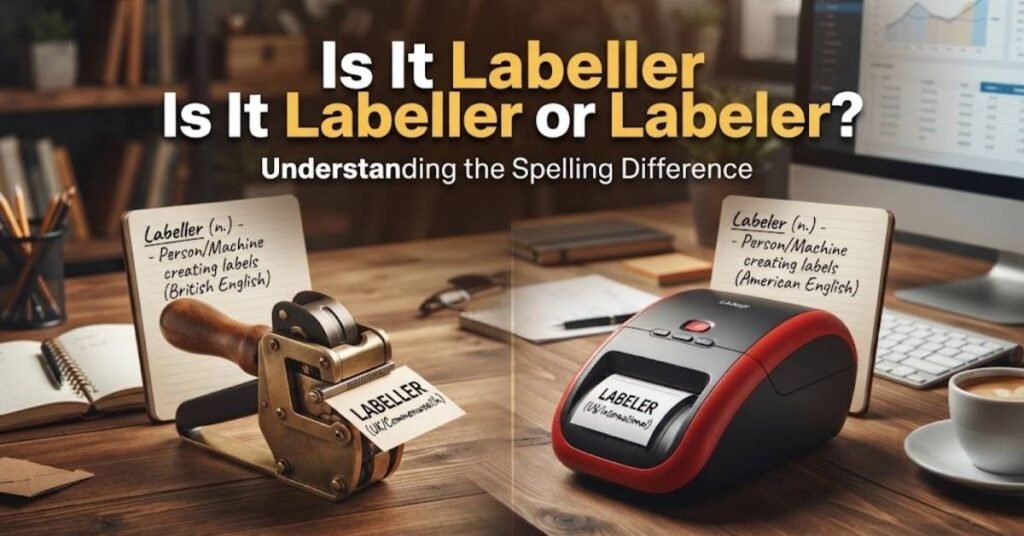
Both Labeller and Labeler are accepted word forms. They describe a person or machine that applies a label to something, such as a product, package, bottle, file, or container.
The main distinction is regional rather than grammatical. Writers in the United States generally use Labeler, while writers in the United Kingdom, Australia, and New Zealand commonly encounter Labeller.
Labeler in American English
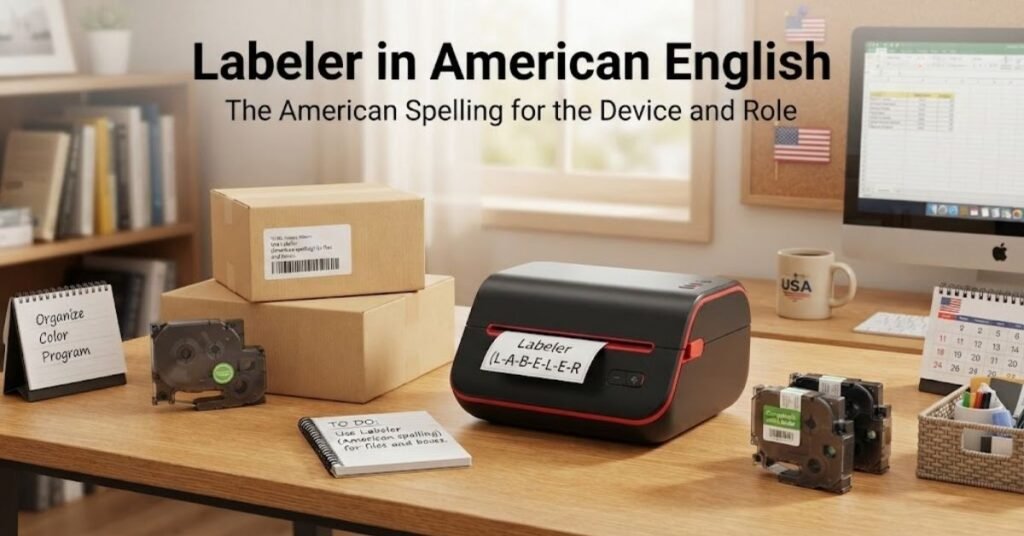
Labeler is the usual American spelling. It follows the American tendency to use a single final L when adding certain suffixes to words ending in L.
For example, American English commonly uses labeling, labeled, and labeler. This pattern can be seen in many forms of professional writing, business writing, and website content.
Labeller in British English
Labeller is the traditional British spelling. The doubled L reflects a common British English pattern involving consonant doubling when a suffix is added.
Along with labeller, British English commonly uses labelling and labelled. These forms are especially familiar in the United Kingdom, although spelling preferences can vary among publishers and organizations.
Quick Answer
If your target audience is primarily American, use Labeler. If you are writing for a British audience, Labeller is generally the natural choice.
The important point is consistency. Neither spelling should automatically be treated as a universal mistake because English varieties have different conventions.
Why Are There Two Different Spellings?
The difference between Labeller vs Labeler comes from broader differences between American English and British English. English developed across different regions, and spelling conventions gradually became standardized in different ways.
That is why readers may see pairs such as Traveler and Traveller, Counselor and Counsellor, or Canceled and Cancelled.
How the Word Is Formed
The word begins with the base word or root word “label.” When the suffix “er” is added, it creates a noun referring to someone or something that performs the action.
So, conceptually, label + er produces labeler. In another spelling convention, the final consonant is doubled, producing labeller.
The same basic process explains related forms such as labeling and labelling. The difference is primarily a matter of regional spelling rules, not a difference in meaning.
Why Dictionaries Accept Both Spellings
Modern English dictionaries document regional usage rather than forcing every English-speaking country to use exactly the same spelling.
Resources such as the Merriam-Webster Dictionary are particularly useful for American usage, while the Cambridge Dictionary provides information relevant to international English and British usage.
Because both forms have established usage, checking a reliable dictionary is more useful than assuming that one spelling must always be wrong.
Common Examples of Labeler and Labeller in Everyday English
You can encounter these words in many practical settings. A labeler or labeller may be a person working in a warehouse, a device used in packaging, or specialized labeling equipment used on a production line.
The meaning stays essentially the same regardless of the spelling. What changes is the regional spelling preference.
Examples with “Labeler”
Here are some natural examples using Labeler:
A warehouse worker operates a portable labeler to identify incoming products.
The thermal labeler prints information for shipping packages.
The company purchased a new handheld labeler for its shipping department.
An automated system can work with a barcode printer to improve production efficiency.
Examples with “Labeller”
In British-oriented writing, you might see sentences such as:
The factory installed an automatic labeller on its packaging line.
The operator checked the high-speed labeller before production began.
The labeller applies product information to bottles as they move through the line.
A modern packaging company may use automated equipment to reduce packaging errors.
Related Word Forms
The spelling difference becomes even clearer when you compare related words. American English commonly uses labeling and labeled, while British English commonly uses labelling and labelled.
These forms are connected to the same verb, “label.” Understanding the complete family of word forms helps writers avoid switching between regional conventions accidentally.
The Grammar Rule Behind Labeller vs Labeler
Although people often call this a grammar rule, the issue is more accurately described as a spelling convention. The grammar and meaning remain essentially unchanged.
The important question is how a particular variety of English handles a word ending in a final L when a suffix is attached.
British English Pattern
British English frequently doubles the final consonant in words such as labelling and labeller. This is part of a broader pattern found in words such as travelling and traveller.
The same regional pattern explains cancelled and totalling. These spellings are familiar in British-oriented academic writing, publishing, and business documents.
American English Pattern
American English generally keeps a single L in labeling, labeler, and labeled. Similar forms include traveling, traveler, and canceled.
This does not mean American spelling is more correct or British spelling is less correct. Each follows established spelling standards within its own language variety.
Remember This Simple Rule
A quick memory trick is:
American English: Labeler, labeling, labeled
British English: Labeller, labelling, labelled
Once you choose your regional spelling, use the same pattern throughout your article, report, or document.
Labeller and Labeler in Different Industries
The terms are not limited to general vocabulary. They are also used in manufacturing, logistics, retail, healthcare, and e-commerce.
In a factory, a labeling machine may place information on products. In a warehouse, a worker may use a handheld device to create shipping labels or barcode labels.
In food packaging, the correct placement of a product label can be part of an organized packaging process. In international business, companies may also need to adapt terminology for different regional markets.
Real-World Case Study: How One Company Improved Content Consistency
Imagine an international company operating separate websites for the United States and United Kingdom. Its American product pages use labeler, while its UK materials use labeller.
The company notices that its global content team is mixing these forms in product descriptions, support documents, and marketing materials. Rather than treating every variation as an error, the editorial team creates a regional style guide.
The U.S. website follows American spelling, while the UK website follows British spelling. Editors also review related terms such as labeling, labelling, labeled, and labelled.
This simple approach improves content consistency, strengthens the company’s brand voice, and creates a more consistent experience for regional readers.
Language Usage Trends (2025–2026)
Modern digital publishing makes regional spelling differences easier to notice. Writers may create one article for several countries, use international software, or work with teams spread across different English-speaking regions.
As a result, localization and language localization have become important considerations for websites and businesses serving multiple markets.
What Current Usage Shows
Current English usage continues to show regional differences rather than one universal spelling. Labeler remains strongly associated with American usage, while Labeller remains established in British-oriented writing.
For international readers, context matters. A UK audience may naturally expect labeller, while a U.S. audience may be more accustomed to labeler.
Common Mistakes to Avoid
Small spelling differences can create unnecessary confusion, particularly in professional content. The best solution is to establish your preferred spelling before you begin writing.
Mixing British and American Spellings
One common mistake is using labeler in one section and labeller in another without a deliberate reason.
Mixing regional forms can make an article look less polished, especially when other words such as traveler, counselor, or canceled follow a different regional pattern.
Changing Spellings Mid-Article
If you start with Labeler, continue using the American pattern throughout the article unless you are specifically discussing British spelling.
The same applies to Labeller. Consistent spelling improves readability, accuracy, and the overall professional impression of your writing.
Ignoring Your Audience
Think about who will read your content. A page targeting a U.S. audience may naturally use American spelling, while a page targeting a UK audience should generally follow British conventions.
For a global website, separate regional pages may use different spelling systems as part of proper localization.
Trusting Auto-Correct Without Checking
A spell-checker, browser spell-checker, or auto-correct tool can be helpful, but it may use a different spell-check language from the one you need.
Before publishing, check whether your word processor is set to English (US) or English (UK). Automatic correction should support your editorial choice, not replace it.
Step-by-Step Guide: How to Choose the Correct Spelling
Choosing between Labeller and Labeler becomes easy when you use a consistent process.
Step 1: Identify Your Audience
First, determine whether your readers are mainly in the United States, United Kingdom, Australia, New Zealand, Canada, or another English-speaking market.
This gives you a practical starting point for choosing the appropriate regional language preference.
Step 2: Check Your Style Guide
If you are writing for a company, publication, school, or website, check its style guide before making a decision.
A style guide may specify American spelling, British spelling, capitalization rules, punctuation, and other editorial preferences.
Step 3: Keep Related Words Consistent
Do not look at labeler in isolation. Check related words such as labeling, labeled, labelling, and labelled.
Keeping the complete family consistent makes your writing style look deliberate and professionally edited.
Step 4: Review Before Publishing
Perform a final proofreading pass before publishing. Search your document for both spellings to make sure an accidental variation has not slipped through.
This quick content review can catch many English spelling mistakes before readers see them.
When Should You Use Labeller or Labeler?
Use Labeler when your content follows American English conventions. This is particularly appropriate for U.S.-focused product pages, marketing materials, software interfaces, and business documents.
Use Labeller when your content follows British English conventions or another variety that maintains the doubled-L form. The key is not to choose based on which word looks more familiar to you, but on the target audience and chosen spelling system.
Expert Tips for Writers
Professional writers should treat regional spelling as part of editorial planning. Before beginning an article, decide which language settings, dictionary, and style guide will control the content.
For SEO content, natural keyword usage matters too. If your primary keyword is “Labeller or Labeler,” you can discuss both forms naturally without filling the page with repetitive keywords.
It is also useful to consider search intent. Someone searching “Is labeller correct?” usually wants a quick spelling explanation, while someone searching “difference between labeller and labeler” may want regional examples and usage guidance.
Mini Quiz: Labeller or Labeler
Test your understanding with this quick mini quiz.
Quiz 1: Which Spelling Fits American English?
Which form generally fits American English?
A. Labeller
B. Labeler
Answer: B, Labeler.
Quiz 2: Fill in the Blank
American English commonly uses “_____” when referring to someone or something that applies a label.
Answer: Labeler.
Quiz 3: True or False
Labeller is an established spelling in British English.
Answer: True.
Quiz 4: Choose the Correct Sentence
Which sentence follows American spelling?
A. The labeller is ready.
B. The labeler is ready.
Answer: B, when following American English.
Quiz 5: Fill in the Blank
British English commonly uses “_____” for the process of applying labels.
Answer: Labelling.
Quiz 6: What Does It Mean?
What does a labeler or labeller generally refer to?
It can refer to a person or machine that applies a label.
Quiz 7: Spot the Audience
Which spelling would generally suit a U.S.-focused website?
Answer: Labeler.
Quiz 8: Fill in the Blank
British English commonly spells the past form as “_____.”
Answer: Labelled.
Quiz 9: True or False
Labeler and labeller normally have different meanings.
Answer: False. The difference is primarily regional spelling.
Quiz 10: Which Pair Matches?
Which pair follows American spelling?
A. Labeller and labelling
B. Labeler and labeling
Answer: B.
Quiz 11: Fill in the Blank
A company serving British readers may choose “_____” in its content.
Answer: Labeller.
Quiz 12: Quick Choice
Writing for a U.S. product page? Choose Labeler or Labeller.
Answer: Labeler.
Quiz 13: Complete the Sentence
A British-oriented article should normally maintain _____ spelling.
Answer: British spelling.
Quiz 14: Which Statement Is Correct?
A. Only Labeler is correct everywhere.
B. Only Labeller is correct everywhere.
C. Both are established regional spellings.
Answer: C.
Quiz 15: Fill in the Blank
The best way to maintain professional content is to use _____ spelling consistently.
Answer: Regional spelling.
References
For reliable spelling and usage information, writers can consult established English dictionaries and editorial resources. The Merriam-Webster Dictionary is particularly useful for American English, while the Cambridge Dictionary provides broad English-language usage information.
When working on academic papers, reports, or professional publications, a relevant style guide should also be checked because organizational preferences can differ.
Conclusion
So, Labeller or Labeler, which spelling is correct? Both are established forms, but their preferred use depends on regional English spelling conventions.Choose Labeler for American English and Labeller for British English and related spelling traditions. The same regional difference appears in labeling vs labelling and labeled vs labelled.
The most important rule for writers is simple: identify your audience, choose the appropriate language variety, follow your style guide, and maintain consistent spelling from beginning to end.
FAQs
Q1: Is labeller or labeler the correct spelling?
Both Labeller and Labeler are accepted English spellings. Labeler is generally preferred in American English, while Labeller is common in British English.
Q2: What is the difference between labeller and labeler?
The main difference is spelling rather than meaning. Both can refer to a person or machine involved in label application.
Q3: Is labeler accepted in the UK?
Labeler can be understood in the UK, but Labeller is the traditional British form and is generally more consistent with British spelling conventions.
Q4: Is labeller wrong in the United States?
No. Labeller is understandable and established, but Labeler is the spelling generally preferred in American English.

Henry Parker is an English language writer with several years of experience helping learners understand grammar and improve their writing. He enjoys breaking down confusing grammar rules into simple explanations and practical examples. Through his work at HexoWaves, Henry shares useful tips on grammar, vocabulary, sentence structure, and everyday English.