
Ever typed a caption, paused, and stared at the word wondering if it’s girlie or girly? You’re not alone.This mix up trips up even people who write for a living. Both words are real, both show up in dictionary entries, and both get used every single day online and offline.So here’s the short answer before we go deeper: girly is the standard adjective you use to describe something feminine, like a dress, a bedroom, or a personality.
Girlie is more of an informal nickname or a noun, often used affectionately to describe a person, especially inside social media culture.Stick around, because we’re going to break down the meaning, the grammar, the trends, and even throw in a fun quiz at the end.
Is It Girlie or Girly?
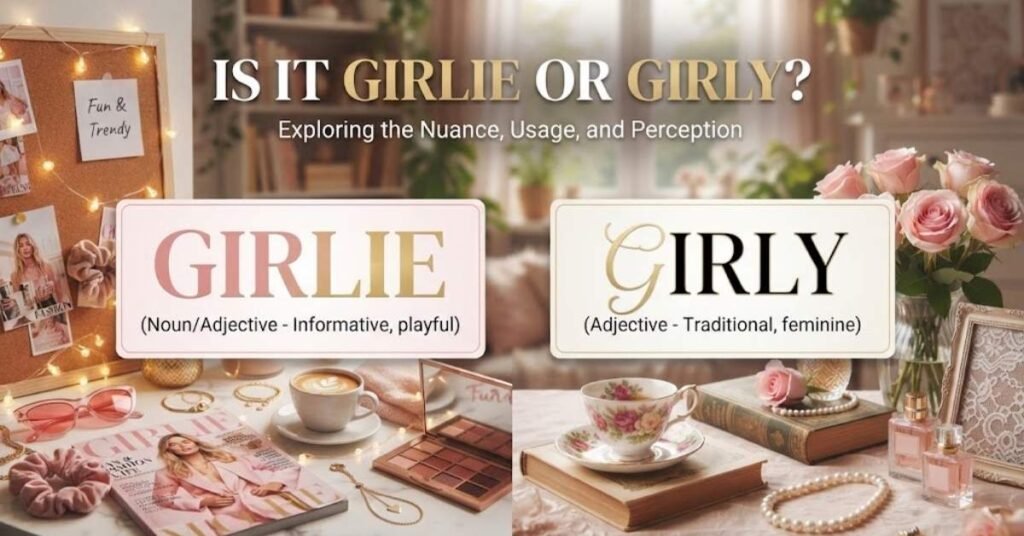
Short answer, both are correct English words, just used in different ways.
Girly works as a descriptive adjective. You’d say a “girly outfit” or a “girly bedroom” the same way you’d say a “cozy sweater.” It describes a quality, a feminine style that leans soft, playful, and traditionally associated with girls or young women.
Girlie, on the other hand, often functions as a noun or a casual form of address. Think “hey girlie” in a text message or a comment. It’s more of a playful expression than a formal descriptor, and that’s exactly why people confuse the two.
Girly Meaning
At its core, girly describes something that has feminine characteristics. It’s the go to word when you’re talking about appearance, style, or even personality traits that lean toward traditional femininity.
You’ll hear it in sentences like “she has a girly laugh” or “that room feels very girly.” It’s an everyday word, comfortable in casual conversation and even light professional writing when the tone allows it.
Girlie Meaning
Girlie carries a slightly different flavor. It’s warmer, chattier, and leans into affectionate territory. People use it to greet friends, tag someone in a post, or describe a shared identity, like “coffee girlie” or “book girlie.”
This word thrives in internet culture. It’s less about describing an object and more about creating a bond, a small inside joke between people who get it.
What’s the Difference Between Girlie and Girlye
The real difference comes down to grammatical role. Girly is your adjective, it modifies nouns. Girlie usually stands in as a noun or a nickname, referring directly to a person.
Here’s a simple test. If you can swap the word with “feminine” and the sentence still makes sense, you probably want girly. If you’re using it to call out to someone or describe yourself as part of a group, girlie fits better.
Think of It This Way
Imagine you’re describing a phone case covered in pink hearts. That’s a “girly phone case,” because you’re describing the object’s style.
Now imagine texting your friend “let’s get coffee, girlie.” Here, girlie is standing in for the person, almost like saying “babe” or “friend.” Same root word, completely different job in the sentence.
Why People Confuse These Words
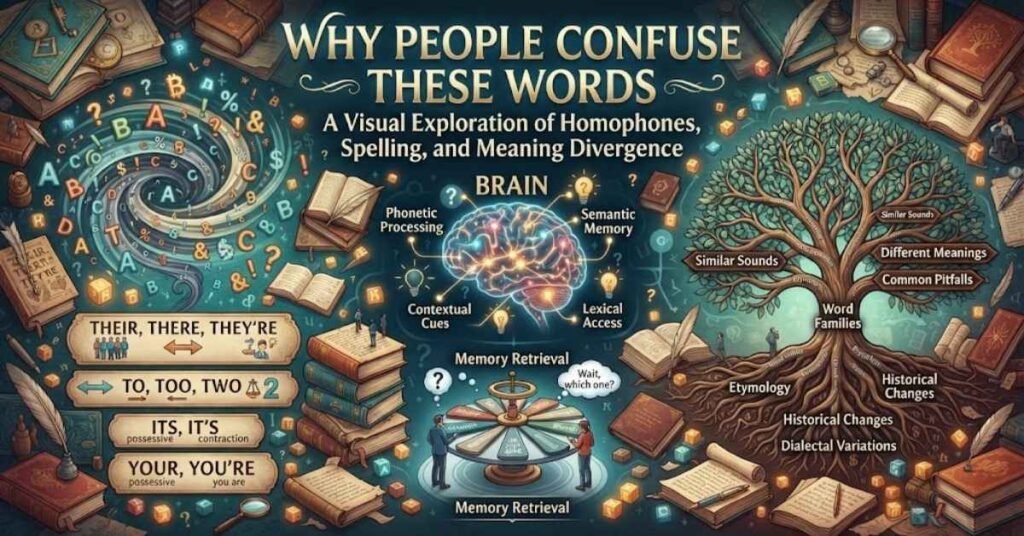
The confusion happens because both words sound nearly identical and share the same origin. English is full of these near twin words, similar to flier vs flyer or accommodation vs accomodation, where one letter changes everything.
Add in the fact that social media blends grammar rules constantly, and you get a word choice mix up that even native speakers debate. It’s not really a mistake, it’s just language evolving faster than the rulebooks.
How Dictionaries Define Girlie and Girly
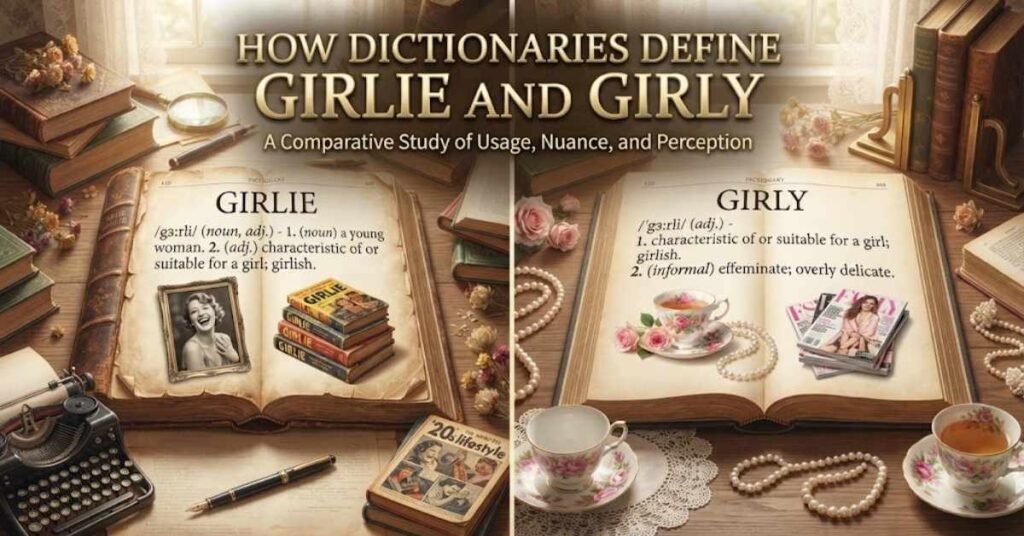
Let’s bring in some authority here. Major reference sources like Merriam-Webster Dictionary and Cambridge Dictionary both recognize these words, though they define them with subtle differences worth knowing.
Understanding the dictionary definitions helps you use the right word confidently, whether you’re writing a blog article or just texting a friend.
Girly Definition
Merriam-Webster defines girly as relating to or having the characteristics of a girl, often used to describe something playful, cute, or soft in aesthetic. It’s classified primarily as an adjective.
Cambridge Dictionary echoes this, describing it as typically feminine in a way that’s associated with young girls, from clothing to colors to general style choices.
Girlie Definition
Girlie appears in dictionaries too, but often tagged as informal. It’s defined as a term for a girl or young woman, frequently used in a casual or affectionate tone rather than a strictly descriptive one.
Some entries also note its use as an informal adjective, similar to girly, which is part of why the overlap confuses so many writers and English learners.
Which One Appears More Often?

In published, formal English, girly shows up more frequently. It’s the safer choice for professional writing, articles, and anywhere you need a clean descriptive adjective.
Girlie dominates in casual expression, especially across TikTok, Instagram, and Pinterest captions, where tone matters more than textbook grammar.
When Should You Use Girly?
Use girly whenever you’re describing a quality or style rather than addressing a person directly. It’s your safest bet in everyday English and even light business writing when the topic calls for it.
Here are the three biggest scenarios where girly just fits better.
Describing Fashion
Think girly fashion, girly outfits, and girly dresses. If you’re a lifestyle blogger writing expert shopping advice, this is your word for describing floral prints, soft fabrics, and anything with a delicate touch.
A boutique selling a “girly summer collection” of dresses and girly handbags is using the word exactly as intended, as a style descriptor for the whole wardrobe.
Describing Colors and Decorations
Girly bedroom ideas usually center around a pink and white theme, pastel colors, and soft floral decoration. Even party planners lean on this word for balloons, wedding invitations, and other feminine touches.
If you’re designing a space or decorating for an event, “girly” describes the entire aesthetic in one clean word.
Describing Personality or Interests
Someone can have a girly personality, meaning their behavior, preferences, or interests lean toward traditionally feminine qualities, think romance novels, skincare routines, or a love for all things soft and pretty.
This isn’t a limiting label either, it’s simply descriptive, the same way you’d call someone sporty or bookish.
When Should You Use Girlie?
Girlie shines in informal writing and conversation. If you’re chatting online, tagging a friend, or writing a caption that needs personality, this word carries the tone better than its cousin.
As a Friendly Nickname
“Hey girlie” is basically the modern version of “hey friend.” It’s warm, it’s quick, and it works in a group chat or a comment section without sounding stiff.
This affectionate nickname usage has become second nature in casual digital communication, especially among younger audiences.
On Social Media
Social media captions love girlie because it instantly builds a sense of belonging. Think “coffee girlie,” “pilates girlie,” “matcha girlie,” or “clean girl girlie.” Each one signals a shared interest and invites others into the identity.
Influencers across online communities use this pattern constantly to connect with followers who share the same lifestyle, from fitness girlie to skincare girlie to travel girlie.
Informal Writing
Outside of social platforms, girlie still fits fine in text messages, blog intros with a conversational tone, or any writing where you want the reader to feel like a friend rather than an audience.
Just keep it out of legal documents, research reports, or academic papers, where the tone needs to stay neutral and precise.
Girlie vs Girly: Key Differences at a Glance
| Feature | Girly | Girlie |
| Part of speech | Adjective | Noun or informal adjective |
| Common use | Describing style, objects, personality | Addressing or referring to a person |
| Tone | Neutral to casual | Playful, affectionate |
| Best setting | Blogs, articles, light business writing | Texts, captions, group chats |
| Formality | More accepted in formal contexts | Strictly informal |
Common Mistakes to Avoid
Even confident writers slip up here. Let’s clear up the most frequent errors so your next sentence lands right the first time.
Mistake 1: Using Girlie as a Formal Adjective
Writing “the girlie dress” in a professional fashion article reads a bit off. Stick with girly for that descriptive job, save girlie for the casual, chatty stuff.
Mistake 2: Using Girly as a Noun
Saying “hey girly, what’s up” isn’t wrong exactly, but it’s less common than “hey girlie.” Since girlie naturally functions as the noun form, it usually sounds more natural in that spot.
Mistake 3: Assuming One Word Is Wrong
Neither word is a typo of the other. Both are legitimate, both appear in dictionary definitions, and both have their place. The mistake is picking the wrong one for your context, not using either at all.
Mistake 4: Using Either Word in Highly Formal Writing
In legal documents, academic papers, or corporate business communications, skip both words entirely. Swap in “feminine” or “traditionally feminine style” for a more standard English tone.
Real-Life Example: How One Content Writer Improved Readability
A content writer working on fashion blog articles once mixed up these two words throughout an entire post, calling accessories “girlie handbags” and readers “girly.” Engagement stayed flat, and comments pointed out the odd phrasing.
After swapping the words to match their correct roles, girly for the products, girlie for addressing readers directly in the intro and conclusion, the article’s readability improved noticeably. Comments picked up, and shares increased too.
This small fix shows how word choice genuinely affects how an audience connects with content, especially when reader expectations around tone are involved.
2025-2026 Language Trends and Usage Data
Language trends heading into 2026 show girlie climbing fast across internet culture, largely thanks to shared-interest communities like “clean girl girlie,” “book girlie,” and “pilates girlie” identities.
Meanwhile, girly remains steady in published books, newspapers, and online articles, holding its ground as the more traditional, dictionary-first choice. Search data also shows rising interest in comparison searches like girlie vs girly, proof that more English learners and casual writers alike want clarity on this exact topic.
Digital language keeps evolving, and words like these prove that modern internet culture doesn’t wait for style guides to catch up.
Mini Quiz: Girlie or Girly
Test yourself with these quick questions. No pressure, just a fun way to lock in the rules.
Quiz 1: Which Word Fits Best?
“That is such a ___ bedroom, all pink and floral!” Answer: girly
Quiz 2: Fill in the Blank
“Hey ___, want to grab coffee later?” Answer: girlie
Quiz 3: True or False
Girlie is always incorrect in formal writing. Answer: True
Quiz 4: Which Sentence Is Correct?
“She wore a girly dress to the party” or “She wore a girlie dress to the party”? Answer: The first one
Quiz 5: Fill in the Blank
“My sister is such a ___, she loves everything pink and sparkly.” Answer: girly girl
Quiz 6: What’s the Best Choice?
Describing a floral phone case: girly or girlie? Answer: girly
Quiz 7: True or False
Girly can only describe objects, never personality. Answer: False
Quiz 8: Fill in the Blank
“Good morning, ___! Ready for our matcha run?” Answer: girlie
Quiz 9: Which Word Describes Something?
Choose the adjective: girly or girlie? Answer: girly
Quiz 10: Fill in the Blank
“This wedding invitation has such a ___ aesthetic.” Answer: girly
Quiz 11: Spot the Correct Sentence
“Call your girlie friends over” or “Call your girly friends over”? Answer: Both work, but girly friends is more standard for describing them, while girlie friends leans casual and affectionate.
Quiz 12: Final Challenge
Which word would you use in a professional fashion catalog description? Answer: girly
References
Definitions and usage notes referenced from Merriam-Webster Dictionary and Cambridge Dictionary, alongside observed patterns across social media platforms including TikTok, Instagram, and Pinterest.
Conclusion
At the end of the day, both girlie and girly are correct, useful, and full of personality. The trick is knowing your context. Reach for girly when you’re describing style, objects, or traits. Reach for girlie when you’re talking to someone directly or joining in on a casual online moment.
Once you get the hang of it, this word distinction becomes second nature, and honestly, kind of fun to use.Got a favorite way you use either word? Drop it in the comments and let’s see how creative this gets.
FAQs
Q1: Is girlie or girly grammatically correct?
Both are grammatically correct. Girly works as an adjective, while girlie commonly works as an informal noun or nickname.
Q2: Which word is more common in formal writing?
Girly appears more often in formal English and professional writing, since it functions cleanly as a descriptive adjective.
Q3: Can I call someone “girlie”?
Yes, it’s a common, affectionate way to address a friend, especially in text messages or social media comments.
Q4: Is “girly” considered offensive?
Not typically. It’s a neutral descriptive term for feminine style or traits, though tone and context always matter.
Q5: Why has “girlie” become so popular online?
Its rise ties directly to internet culture and shared-interest communities, where identities like “coffee girlie” or “matcha girlie” build a quick sense of belonging.
Q6: Can “girlie” replace “girly” in every sentence?
No. Girlie works best as a noun or nickname, while girly handles the job of describing objects, style, or personality as an adjective.

Henry Parker is an English language writer with several years of experience helping learners understand grammar and improve their writing. He enjoys breaking down confusing grammar rules into simple explanations and practical examples. Through his work at HexoWaves, Henry shares useful tips on grammar, vocabulary, sentence structure, and everyday English.