

You typed a quick thank you message. Then you paused. Should it say “I appreciate it” or “I appreciated it“? That tiny letter “d” feels small, but it can change how your message lands.
This guide clears up the confusion for good. You’ll learn the grammar rule, see real examples, and never freeze over this again.
What Is the Difference Between “Appreciate It” and “Appreciated It”?
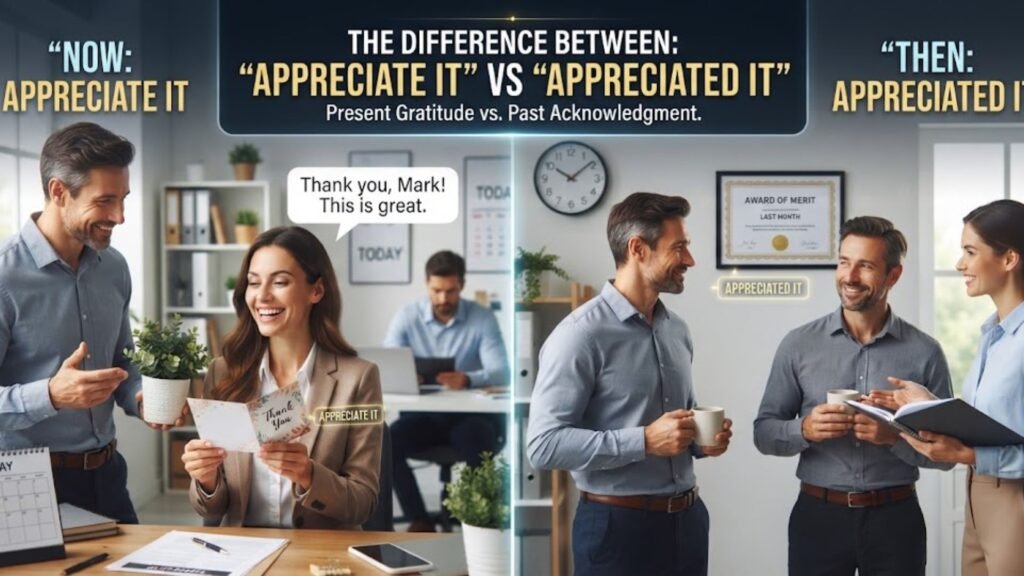
The short answer: appreciate it talks about right now. Appreciated it talks about something that already happened. That’s the whole trick, really.
Think of it like checking the time on two different clocks. One clock shows today. The other shows a snapshot from last week. Same clock, different moment.
Once you lock that idea in, picking the right phrase gets a lot easier. Let’s break down each one.
Understanding “Appreciate It”
I appreciate it uses present tense. It means the feeling of gratitude exists right now, in this exact moment. Someone just helped you, and you’re saying thanks while it’s still fresh.
You’ll hear this one everywhere. A coworker sends a file, you reply “thanks, I appreciate it.” Simple, direct, and it fits the current situation perfectly.
Understanding “Appreciated It”
I appreciated it shifts things into past tense. The gratitude belonged to a moment that’s already closed. Maybe it was last month, last year, or during a project that wrapped up ages ago.
This phrase works well when you’re looking back. You’re not thanking someone for something happening now. You’re recalling a past experience and how it made you feel back then.
Why People Confuse These Two Phrases
Here’s the honest truth. Even fluent speakers mix these up sometimes. English tenses don’t always announce themselves loudly, so it’s an easy slip.
Common Mistake
The biggest common mistake happens when people use past tense for something still happening. Saying “I appreciated your help” about assistance you’re receiving right now sounds off. It hints the gratitude has already faded, which isn’t what you meant.
Another Common Error
The flip side happens too. Someone describes an old memory but uses present tense by accident. “I appreciate your support” when talking about college days sounds slightly mismatched with the rest of the story.
Why Context Matters
Context is the deciding factor every single time. Look at what surrounds your sentence. Are you speaking about now, or about something that already wrapped up?
Once you spot the timeline, the correct verb tense almost picks itself.
When to Use “I Appreciate It”
Use this phrase whenever the feeling exists now. It’s your go to for anything current, immediate, or still unfolding.
In Daily Conversations
Someone holds the door, passes the salt, or gives you directions. You say “thanks, I appreciate it” on the spot. It’s casual, warm, and fits daily conversations without sounding stiff.
In Professional Emails
Professional emails lean on this phrase constantly. “I appreciate your quick response” or “I appreciate your patience” both sound polished and current. It signals professionalism without being overly formal.
In Customer Service
Customer service teams use this line to keep tone friendly and immediate. “We appreciate your feedback” tells the customer their input matters right now, not just someday.
Why It Sounds Natural
Native speakers reach for present tense because gratitude often feels immediate. It matches the emotional beat of the moment, which is exactly why this phrase feels so natural.
When to Use “I Appreciated It”
This version belongs to memories, stories, and reflections. It’s your tool for anything that’s already finished.
Referring to Past Experiences
Talking about an internship, an old job, or a favor from years back? “I appreciated your guidance during my first job” fits because that chapter is closed.
In Storytelling
Storytelling often needs past tense to keep the timeline consistent. “She appreciated every chance to learn something new that summer” reads smoothly because the whole story sits in the past.
In Reflections and Reviews
Writing a review or reflecting on an old experience calls for this phrase too. “I appreciated the flexibility they offered during training” fits a reflection on something already over.
Why It Fits Historical Contexts
Past tense signals distance. It tells your reader, gently, that you’re describing historical context rather than something happening today.
Real-Life Case Study: How One Job Applicant Avoided a Costly Grammar Mistake
Sarah, a recent marketing graduate, sent a follow up email after her interview process. Her draft said “I appreciated the opportunity to speak with your team,” which technically works since the interview had ended.
But she almost wrote “I appreciate the opportunity” in the same paragraph, right next to a sentence thanking them for something still ongoing, like their consideration of her application. That mismatch would’ve confused the hiring manager.
She fixed it by checking her timeline sentence by sentence. The result read cleanly, and the hiring team later told her the email felt confident and polished. Small grammar choices really do shape professional impression.
Grammar Rule Behind “Appreciate It or Appreciated It”
Grammar doesn’t have to feel scary. Here’s the plain version without the textbook jargon.
Present Tense Rule
If the action or feeling is happening now, stick with present tense. “I appreciate it” tells your reader this gratitude is live, active, and current.
Past Tense Rule
If the moment already ended, switch to past tense. “I appreciated it” places the feeling firmly behind you, in a completed event.
Quick Memory Trick
Here’s a simple memory trick. Ask yourself, “Is this still happening?” Yes means appreciate. No means appreciated. That’s genuinely it.
Data and Statistics: Why Proper Grammar Still Matters in 2025–2026
Grammar might feel like a small detail, but employers notice it more than you’d think. Grammarly Business research has repeatedly found that writing errors cost companies credibility with clients and coworkers alike.
The National Association of Colleges and Employers (NACE) consistently ranks written communication skills among the top traits employers look for in new hires. That hasn’t changed heading into 2025 to 2026, especially with more hiring decisions happening through email and chat before anyone even meets face to face.
In a world of remote interviews and async communication, your grammar skills often speak before you do. A misplaced tense in a job application or client email can quietly chip away at your professional credibility, even if nobody says a word about it.
Recruiters skim resumes and emails in seconds, and small tense slips like mixing up appreciate and appreciated can make a message feel rushed. It’s not that one typo ruins everything. It’s that written communication patterns add up, forming a quiet impression long before anyone reads your full pitch.
This is exactly why workplace communication studies keep pointing back to the basics. Clear sentences, matched tenses, and confident wording still beat flashy vocabulary. Employers aren’t grading you like an English teacher, but they are noticing whether your writing feels polished or careless.
Step-by-Step Guide: How to Choose the Correct Phrase Every Time
Here’s a simple step-by-step guide you can run through in seconds.
Step 1: Identify the Time Frame
Ask whether you’re talking about now or then. This single question solves most of the confusion instantly.
Step 2: Look for Time Indicators
Words like “today,” “right now,” “yesterday,” or “last year” are your time indicators. They practically tell you which tense to pick.
Step 3: Match the Verb Tense
Once you know the timeframe, match your verb to it. Present moment gets present tense. Past moment gets past tense.
Step 4: Read the Sentence Aloud
This step sounds simple, but it works. Reading a sentence out loud often reveals awkward tense choices your eyes might miss.
Step 5: Double-Check Context
Look at the sentences around it too. Consistency across your paragraph keeps the whole message sounding natural and clear.
Common Alternatives to “I Appreciate It”
Sometimes you want variety instead of repeating the same phrase over and over. Here are some solid swaps.
Professional Alternatives
- Thank you for your assistance
- I sincerely appreciate your help
- Your support is greatly appreciated
- Thank you for your time
Casual Alternatives
- Thanks a lot
- Much appreciated
- Thanks, I really appreciate it
- I can’t thank you enough
Formal Alternatives
- I am grateful for your support
- Please accept my sincere appreciation
- I am thankful for your assistance
Quick Mini Quiz: Test Your Grammar Skills!
Ready for a fun little grammar quiz? No pressure, just a quick way to check what you’ve learned.
Quiz 1: Which sentence sounds correct?
“I appreciate your help right now” or “I appreciated your help right now”? The first one wins since “right now” signals present tense.
Quiz 2: You’re talking about last year’s event. Which phrase should you use?
Past tense fits here. “I appreciated the event” matches a moment already gone.
Quiz 3: Fill in the blank:
“We ______ your continued support.” Present tense wins again, since “continued” means it’s ongoing.
Quiz 4: Which phrase refers to a past experience?
“Appreciated it” always points backward toward something finished.
Quiz 5: True or False?
Both phrases can appear in the same email. True, as long as each one matches its own timeframe correctly.
Quiz 6: Choose the correct sentence:
“I appreciate your guidance during training” (if training is ongoing) beats the past tense version in that scenario.
Quiz 7: One Last Challenge!
Try writing one sentence with each phrase about your own week. It’s the fastest way to make this rule stick.
FAQs
Q1: Is “I appreciate it” grammatically correct?
Yes. It’s correct present tense usage for something happening now.
Q2: Is “I appreciated it” grammatically correct?
Also correct. It properly reflects past tense for a finished moment.
Q3: Which phrase is more professional?
Neither is inherently more professional. The right one simply depends on your timeline.
Q4: Can I say “I really appreciate it”?
Absolutely. Adding “really” just adds warmth without changing the tense.
Q5: Why does “I appreciated it” sometimes sound awkward?
It usually sounds off when used for something still ongoing, creating a mismatch with the rest of your message.
Q6: Can both phrases appear in the same conversation?
Yes, often they should. Different sentences can reference different moments in time.
Q7: Which phrase is more common?
“I appreciate it” shows up more often simply because gratitude usually gets expressed close to the moment it happens.
Conclusion
Choosing between appreciate it and appreciated it really comes down to one question: is it happening now, or did it already happen? Keep that timeline check in your back pocket, and you’ll never second guess this phrase again.
Small grammar choices shape big impressions, whether you’re writing a follow up email, chatting with a friend, or leaving a review. Get the tense right, and your words will always land the way you meant them to.

Henry Parker is an English language writer with several years of experience helping learners understand grammar and improve their writing. He enjoys breaking down confusing grammar rules into simple explanations and practical examples. Through his work at HexoWaves, Henry shares useful tips on grammar, vocabulary, sentence structure, and everyday English.