
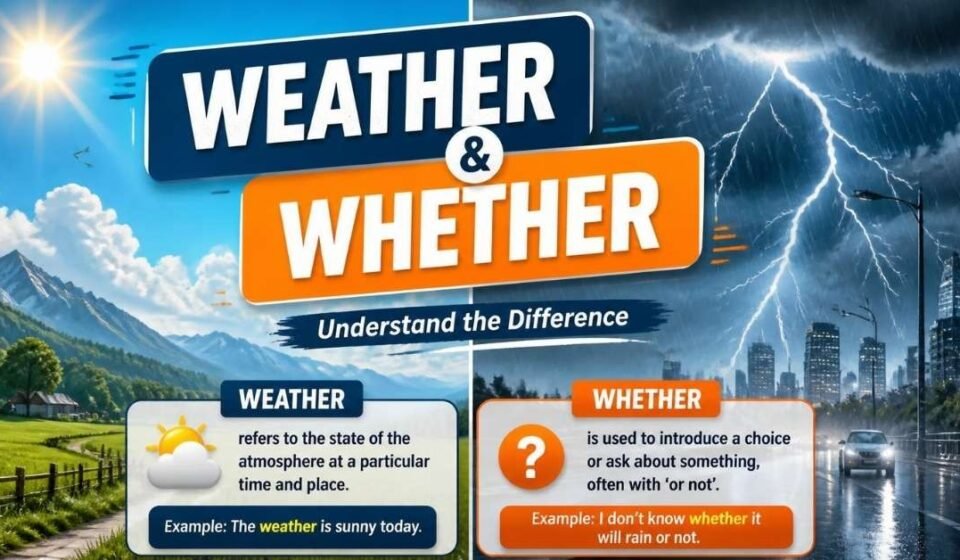
Ever typed “weather” when you meant “whether” and only caught it after hitting send? You’re not alone.These three words sound almost identical, but they mean completely different things. Get themmixed up in an email or a blog post, and it can make you look careless, even if your grammar is otherwise solid.
This guide clears up the confusion for good. By the end, you’ll know exactly when to use wether, weather, and whether, and you’ll have a few memory tricks that stick.
Featured Snippet Answer: Wether or Weather or Whether
Quick answer: weather refers to atmospheric conditions like rain, sun, or wind. Whether is a conjunction used to express uncertainty or a choice between options. Wether is a rare noun meaning a castrated male sheep or goat.
They’re homophones, meaning they sound the same but carry different meanings and spellings. That’s exactly why they trip up so many writers, even experienced ones.
If you only remember one thing from this article, remember this: weather is about the sky, whether is about a decision, and wether is about a sheep.
What Is the Difference Between Wether, Weather, and Whether?
These three words belong to completely different worlds. One deals with the sky above you, one deals with the choices in your head, and one deals with farm animals you’ll probably never mention in daily writing.
Understanding this separation makes word choice far easier. Once your brain files each word under its own category, the confusion mostly disappears.
Let’s break each one down individually so there’s zero ambiguity left.
Wether: A Word About Sheep
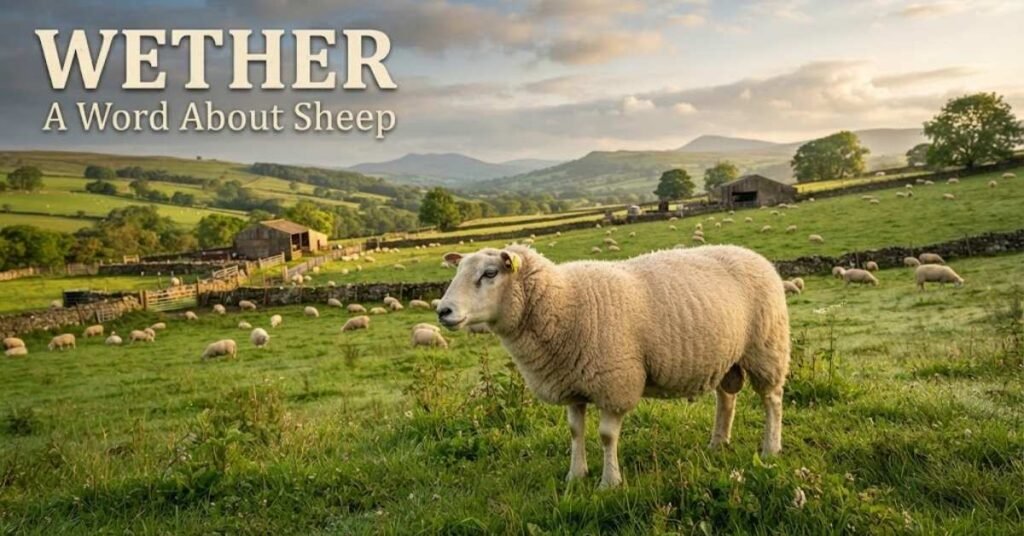
A wether is a castrated male sheep, and sometimes the term applies to a castrated male goat too. It’s a term you’ll mostly hear on a farm or from a shepherd managing a flock.
Outside of animal husbandry and sheep farming circles, this word almost never shows up. That’s part of why it’s so easy to forget it even exists.
Weather: Conditions Outside
Weather describes atmospheric conditions, things like rain, snowfall, sunshine, wind, and storms. It’s the word you use when talking about a weather forecast or today’s temperature.
You’ll use this word constantly, whether you’re planning a picnic, a hiking trip, or just deciding what to wear.
Whether: Choice, Doubt, or Uncertainty

Whether signals uncertainty or presents a choice
between two or more alternatives. It often appears in indirect questions, like “I don’t know whether she’s coming.”
This word does a lot of heavy lifting in everyday English grammar, connecting ideas that involve doubt or decision-making.
What Does “Weather” Mean and When Should You Use It?
Most people already understand “weather” fairly well, but the small details are worth nailing down. It’s not just a noun. It can shift roles in a sentence depending on context.
Getting comfortable with both uses makes your writing sound more natural and less textbook-stiff.
Weather Refers to Atmospheric Conditions
At its core, weather refers to short-term conditions in the atmosphere, not long-term patterns. That distinction matters because climate describes trends over years, while weather describes what’s happening right now outside your window.
Think cloud cover, humidity, or a sudden downpour. All of that falls under weather, and it changes by the hour, not the decade.
“Weather” Can Also Be a Verb
Here’s something a lot of writers miss. “Weather” can function as a verb, meaning to endure or survive something difficult.
You’ll see this in phrases like “weather the storm” or “weather a crisis.” A company trying to weather an economic crisis isn’t talking about rain at all, it’s talking about survival.
Easy Memory Trick for “Weather”
Here’s a simple trick: weather has “ea” in it, just like “sea” and “sky.” Both words connect to nature and the outdoors.
Picture the letters “ea” as Earth and atmosphere working together. That visual alone should keep the spelling locked in your memory.
What Does “Whether” Mean and How Do You Use It?
“Whether” is where most confusion happens, mainly because it sounds so close to “weather.” But its job in a sentence is completely different, and once you see the patterns, it clicks fast.
This word is all about decisions, possibilities, and unresolved questions. Let’s look at exactly how it gets used.
Use “Whether” for Uncertainty
When you’re unsure about something, “whether” is usually the right word to reach for. For example: “I’m not sure whether the meeting got rescheduled.”
This use ties directly into expressing doubt, and it’s one of the most common jobs this word does in daily writing.
Use “Whether” When There Are Alternatives
“Whether” also introduces choices or possibilities between two paths. Something like “whether to stay or leave” presents two clear options.
You’ll see this pattern constantly in decisions like whether to apply, whether to travel, or whether to continue a project.
Use “Whether or Not” for Either Outcome
Sometimes you want to stress that the outcome doesn’t change your decision. That’s where “whether or not” comes in, as in “I’m going, whether or not it rains.”
This phrase adds emphasis, showing that both possibilities lead to the same result.
When “Whether” Is Better Than “If”
People often ask, can “if” replace “whether”? Sometimes, but not always, and this is a real content gap worth addressing directly.
Use “whether” when presenting formal alternatives, especially in an indirect question or before an infinitive. “If” works better for simple conditions, like “if it rains, we’ll stay in.” Mixing them up won’t always cause confusion, but precise English usage always sounds sharper.
What Does “Wether” Mean?
This is the word most people have genuinely never seen before opening this article. It’s rare, old-fashioned in daily use, and almost entirely tied to farming.
Knowing it exists, though, helps you avoid an embarrassing typo when you actually meant “weather” or “whether.”
Why Is “Wether” So Rare?
“Wether” belongs to a very specific slice of vocabulary connected to livestock and farm life. Unless you’re reading about sheep farming or animal-related terms, you likely won’t encounter it.
Its rarity is exactly why spell-checkers sometimes suggest “weather” instead, which only adds to the confusion.
The Connection Between “Wether” and “Bellwether”
Here’s a fun linguistic nugget. The word bellwether, meaning something that indicates a trend, actually comes from wether.
Farmers used to hang a bell around the neck of a lead sheep, called the bell sheep, so the rest of the flock would follow it. That’s how “bellwether” came to mean an early indicator of what’s coming next.
Wether vs Weather vs Whether: A Detailed Comparison
Seeing these words side by side makes the differences click faster than any explanation alone. This section is your quick-reference zone.
Bookmark it if you need a fast comparison checklist the next time doubt creeps in.
Quick Comparison Checklist
- Weather = noun/verb about outdoor conditions (rain, wind, sun, storms)
- Whether = conjunction about choices, doubt, or alternatives
- Wether = noun meaning a castrated male sheep or goat
Compare the Words in Similar Sentences
“The weather looks great for a road trip this weekend.” “I’m unsure whether we should take the road trip at all.” “The farmer sold three wethers at the market.”
Notice how similar the sentences sound out loud, yet each word does a completely different job. That’s sound vs meaning in action.
The One-Question Method
Ask yourself: “Am I talking about the sky, a decision, or a sheep?” That single question resolves almost every mix-up instantly.
It’s a fast, practical memory trick you can use even under deadline pressure.
Common Mistakes People Make With Weather and Whether
Even skilled writers slip on these words sometimes, usually because the mistake happens fast during typing. Here are the most frequent errors worth watching for.
Catching these early saves you from incorrect spelling showing up in published content.
Mistake 1: “Weather You Like It or Not”
This should be “whether you like it or not,” since it’s expressing a choice, not the sky. It’s one of the most common grammar mistakes in casual writing.
Mistake 2: “Check Whether Forecast”
This one flips the error around. It should be “check the weather forecast,” since you’re referring to atmospheric conditions, not uncertainty.
Mistake 3: Using “Wether” as a General Alternative
Some writers type “wether” by accident when they meant “weather” or “whether.” Spell-check won’t always catch it, since “wether” is technically a real word.
Mistake 4: Confusing Sound With Meaning
Because these are similar sounding words, people sometimes trust their ears over the actual context. Always double-check meaning before publishing, especially in business writing or professional communication.
A Real-Life Writing Example: How Context Prevents an Expensive Mistake
Picture an event manager sending an email to hundreds of registered attendees about an outdoor gathering. She meant to write, “We’ll confirm whether the event stays outdoors or moves indoors.”
Instead, a rushed edit turned it into “We’ll confirm weather the event stays outdoors.” Half the recipients thought she meant an actual forecast update, not a decision about the venue.
That single swapped word created confusion, extra support emails, and a slightly embarrassing follow-up correction. It’s a small example, but it shows exactly how word choice affects real business outcomes, not just grammar scores.
Why Correct Word Choice Still Matters in 2025-2026
With so much writing now happening across digital communication, newsletters, and social media, small errors travel fast and get noticed. A single typo in a company’s product pages or website copy can undercut credibility instantly.
Search engines have also gotten sharper at rewarding content that reads cleanly and accurately. That’s part of Google’s push toward genuinely helpful content, not just keyword-stuffed pages.
What the Data Means for Everyday Writing
Readers today skim fast and judge quality within seconds. A confused word choice, even a tiny one, can make someone bounce off a page or distrust an entire article.
This isn’t about perfectionism. It’s about respecting the reader’s time and building writing confidence that shows in every sentence.
Accuracy Supports Clarity and Trust
Clear, accurate writing signals expertise without you having to say “trust me” outright. When your spelling and grammar hold up, readers naturally assume the rest of your content is reliable too.
That trust is exactly what turns a casual reader into a repeat visitor.
How to Remember Wether, Weather, and Whether
Memory tricks work because they turn abstract spelling rules into something visual or emotional. Here are simple ones that actually stick.
Try picking just one from this list and repeating it a few times today.
Remember: Weather Has “EA”
Think “sEA” and “wEAther.” Both connect to the outdoors, and that shared “ea” pattern is your anchor.
Remember: Whether Is About “Which”
Notice how “whether” and “which” both start similarly and both deal with choices. That link alone can save you mid-sentence.
Remember: Wether Is the Sheep Word
Picture a sheep wearing a bell, tied directly to the bellwether story from earlier. Odd images are memorable, and that’s the whole point.
The Three-Word Formula
Sky = Weather. Choice = Whether. Sheep = Wether. Repeat that formula a few times and it becomes second nature fast.
How to Use “Whether” Correctly in Different Sentence Patterns
“Whether” shows up in more sentence structures than people realize. Recognizing these patterns makes your writing feel more polished and less accidental.
Let’s walk through the four most common patterns you’ll actually use.
Whether in Indirect Questions
This pattern reports a question without directly asking it. “She asked whether the flight was delayed” is a perfect example of reporting questions naturally.
Whether…Or
This structure lays out two direct options clearly. “Whether you drive or fly, we’ll meet you there” shows both alternatives side by side.
Whether or Not
As covered earlier, this phrase emphasizes that the result stays the same either way. “Whether or not you agree, the deadline stands.”
Whether Before “To + Verb”
This pattern pairs whether with an infinitive, like “whether to buy” or “whether to study abroad.” It’s incredibly common in decision-focused writing, from business proposals to personal blogs.
Can “Weather” and “Whether” Appear in the Same Sentence?
Yes, and honestly, it happens more often than you’d think. Here’s one: “Whether the weather improves by Friday will decide if the trip happens.”
Sentences like this test your understanding the most, since both words sit right next to each other. If you can write one confidently, you’ve fully mastered the difference between the two.
Mini Quiz: ‘Wether’ or ‘Weather’ or ‘Whether’
Test yourself before scrolling to the answers. This is a fun way to lock in everything you just learned.
Grab a pen, jot down your answers, and check your accuracy afterward.
Quiz 1: Pick the Right Word
“I don’t know ___ we should leave now or wait.” (Answer: whether)
Quiz 2: Fill in the Blank
“The ___ turned cold suddenly last night.” (Answer: weather)
Quiz 3: Spot the Correct Sentence
“Whether looks nice today” or “Weather looks nice today”? (Answer: the second one)
Quiz 4: Fill in the Blank
“The farmer kept the ___ separate from the rest of the flock.” (Answer: wether)
Quiz 5: Quick Choice Challenge
“We’ll go camping ___ it rains or not.” (Answer: whether)
Quiz 6: Can You Complete It?
“She wasn’t sure ___ to accept the job offer.” (Answer: whether)
Quiz 7: Find the Mistake
“Check the whether report before the trip.” (Correction: weather)
Quiz 8: Double Word Challenge
“___ the ___ clears up will decide our plans.” (Answer: Whether, weather)
Quiz 9: Fill in the Blank
“The company had to ___ a tough financial year.” (Answer: weather, used as a verb)
Quiz 10: The Easy Memory Test
Which word connects to sheep? (Answer: wether)
References
- Cambridge Dictionary, entries for “weather,” “whether,” and “wether”
- Merriam-Webster, definitions and usage notes for commonly confused homophones
FAQs
Q1: Is it “whether or weather” when talking about a choice?
It’s “whether.” Choices, doubt, and alternatives always call for “whether,” never “weather.”
Q2: What is the meaning of “wether”?
A wether is a castrated male sheep, and occasionally the term extends to a castrated male goat too.
Q3: Is “weather” a noun or a verb?
Both. As a noun it means atmospheric conditions, and as a verb it means to endure or survive something difficult.
Q4: Can “if” replace “whether”?
Sometimes, especially in casual conditions, but “whether” is more precise for formal alternatives or indirect questions.
Q5: Is “whether or not” always necessary?
No. Plain “whether” often works fine unless you specifically want to emphasize that the outcome stays the same regardless.
Q6: Why do people confuse weather and whether?
They’re homophones with nearly identical pronunciation, so the ear picks up the same sound even though the meanings differ completely.
Q7: Can all three words appear in one sentence?
Yes, though it’s rare and mostly used to test grammar knowledge, like “Whether the wether survives the weather depends on the shelter.”
Final Thoughts
Three words, three completely different meanings, and one simple trick to keep them straight. Weather is about the sky, whether is about a decision, and wether belongs to the farm.Next time your fingers move faster than your brain, pause for a second and ask the one-question method: sky, decision, or sheep?
That tiny habit alone will save you from a mistake readers definitely notice.Got a mix-up story of your own? Share it in the comments, it happens to the best writers out there.

Henry Parker is an English language writer with several years of experience helping learners understand grammar and improve their writing. He enjoys breaking down confusing grammar rules into simple explanations and practical examples. Through his work at HexoWaves, Henry shares useful tips on grammar, vocabulary, sentence structure, and everyday English.