
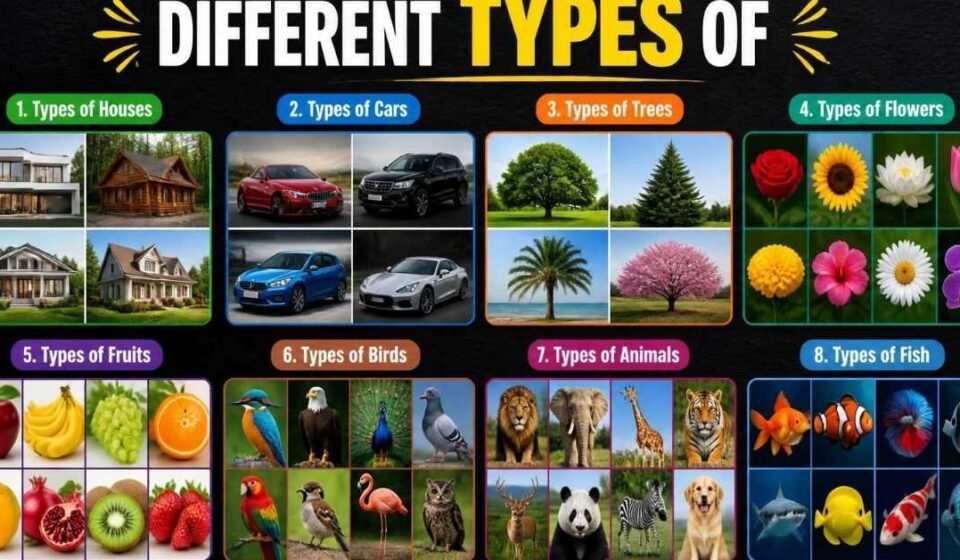
Ever typed “what kind of” into a sentence and then paused, wondering if it should actually be “what kinds of”? You’re not alone. This tiny grammar question trips up even confident English speakers.
Here’s the short answer: what kind of works with a singular noun or one general category, while what kinds of points to a plural noun and multiple varieties. But that’s just the surface. Keep reading, because the real rule depends on meaning, not just the noun sitting next to it.
What Is the Difference Between What Kind of and What Kinds of?
The core difference comes down to scope. “What kind of” asks about a single type, category, or classification. Think of it as one bucket you’re trying to name.
“What kinds of” asks about several categories at once. You’re expecting more than one answer, maybe a whole range of answers instead of just one.
This isn’t only about grammar rules stuck in a textbook. It’s about what answer you actually expect back from the person you’re talking to.
Quick Comparison Table
| Phrase | Noun Type | Expected Answer | Example |
| What kind of | Singular or uncountable noun | One general type | What kind of music do you like? |
| What kinds of | Plural noun | Multiple varieties | What kinds of music do you like? |
| What type of | Singular noun (formal) | One specific category | What type of support do you need? |
What Does “What Kind of” Mean?
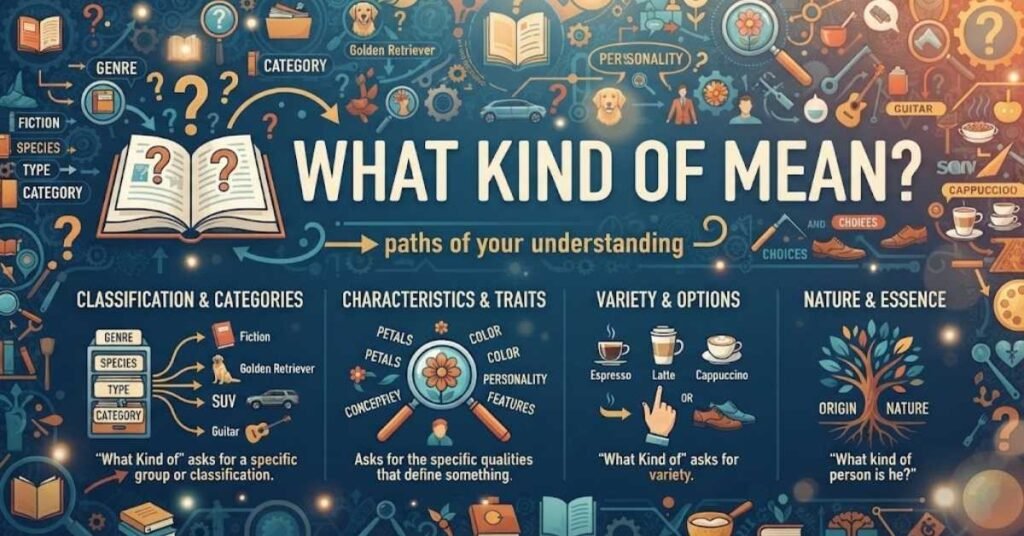
“What kind of” is your go-to when you’re asking about one general category. You want a single, clear answer, not a list.
It works with singular nouns most of the time, but it also shows up with uncountable nouns like advice, help, or information. The focus stays narrow.
Say your friend mentions she’s job hunting. You’d naturally ask, “What kind of job are you looking for?” You expect one answer, like remote work or something creative.
What Kind of + Singular Noun
This is the classic pairing. A singular noun after “what kind of” almost always sounds right. “What kind of car do you drive?” expects one model, not five.
The listener knows you want a focused answer. There’s no ambiguity about how many things you’re asking about.
What Kind of + Uncountable Noun
Uncountable nouns like music, advice, and information don’t have a plural form, so “what kind of” fits naturally here too. “What kind of advice are you looking for?” makes total sense.
You’re not asking for multiple pieces of advice by category. You’re asking about the general nature of the advice itself, practical or emotional, for example.
What Kind of + Plural Noun: Can It Be Correct?
Here’s where it gets interesting. “What kind of” can pair with a plural noun when you’re treating that group as one general category.
“What kind of shoes are comfortable for hiking?” This works because you’re asking about one type of shoe, even though “shoes” is plural. Context beats grammar textbooks here.
When Should You Use “What Kinds of”?
Switch to “what kinds of” the moment you expect multiple types in the answer. This phrase invites a list, not a single item.
It signals to your reader or listener that you’re genuinely curious about different varieties, not just one straightforward pick.
What Kinds of + Plural Noun
The most common pattern pairs “what kinds of” with a plural noun. “What kinds of books do you read?” naturally expects more than one genre, maybe mystery, fantasy, and biographies all at once.
This combination feels natural because plural nouns often carry the idea of variety already built in.
Use It When Variety Is Important
If your intended meaning is about diversity, “what kinds of” is your best friend. You’re not settling for one category. You want the full range of categories someone deals with.
A teacher asking students, “What kinds of challenges did you face on this assignment?” expects several different answers, not just one issue.
The Plural Form Makes Multiple Categories Clearer
Using the plural form removes ambiguity when your question genuinely covers several classifications. It tells your reader upfront that you’re not narrowing things down to a single answer.
This small wording choice actually shapes how people respond to you, both in conversation and in written surveys.
What Kind of vs What Kinds of: The Easy Grammar Rule
Forget memorizing a dozen exceptions. The simplest approach is asking yourself one question before you speak or write.
Are you picturing one general category, or are you picturing several types stacked together? That single thought solves most of your confusion instantly.
Ask Yourself: One General Category or Several Types?
This is the fastest mental shortcut available. If you can answer your own question with one word, like “jazz,” use “what kind of.” If you’d naturally answer with a list, switch to “what kinds of.”
It works better than any singular-versus-plural rule because it focuses on meaning first.
Examples That Show the Difference
“What kind of phone do you use?” expects one brand or model. “What kinds of phones does your store sell?” expects a whole lineup, from budget models to flagship devices.
Notice how the noun barely changes, but the expected answer shifts completely based on the phrase you pick.
A Simple Memory Trick
Picture a basket. “What kind of” asks about one item in that basket. “What kinds of” asks you to describe everything sitting inside it.
Whenever you’re stuck, picture that basket. It settles the question faster than any grammar chart ever could.
Why Context Matters More Than a Simple Singular or Plural Rule
Relying purely on singular versus plural sounds neat, but real English doesn’t work that cleanly. Context almost always wins the final decision.
Native speakers bend the “rule” constantly because meaning shapes wording more than grammar charts do.
Meaning Can Change the Best Choice
Two people could ask about the exact same noun and choose different phrases, depending on what they’re picturing in their head. That’s not wrong. It’s just different intended meaning.
“What kind of exercise do you enjoy?” versus “What kinds of exercises should beginners try?” both work, but they answer different questions entirely.
Plural Nouns Do Not Always Require “Kinds”
As shown earlier, plural nouns don’t automatically force “what kinds of.” Treating this as an absolute rule leads to some of the most common grammar confusion among English learners.
Always check what you’re actually picturing before locking in your phrase.
Formal Writing Often Benefits From Greater Precision
In academic writing or professional communication, being extra precise helps avoid ambiguity. Choosing the correct phrase upfront saves your reader from misreading your question.
A well-worded survey question, for instance, gets cleaner, more useful responses.
Real-Life Case Study: How One Small Word Changes the Expected Answer
Picture a customer support team sending out a survey with the question, “What kind of problem did you experience?” They expected one clear issue per response.
Instead, customers kept listing multiple problems in a single box, because their situations genuinely involved several things going wrong at once.
The team rewrote the question to “What kinds of problems did you experience?” Response quality improved almost overnight. Customers finally felt permission to list everything, and the support team got richer, more useful data.
That’s the real power hiding inside this small grammar choice. It shapes how people respond, not just how a sentence sounds.
Common Mistakes With What Kind of and What Kinds of
Even confident writers slip up here occasionally. Most mistakes come from relying on shortcuts instead of thinking about actual meaning.
Here are the patterns worth watching for in your own writing.
Mistake 1: Choosing Only by the Following Noun
Many people default to “singular noun equals what kind of” and “plural noun equals what kinds of” without checking meaning first. This shortcut fails in plenty of real sentences, as we’ve already seen.
Mistake 2: Using “What Kinds of” With an Uncountable Noun Without Meaning Varieties
“What kinds of information do you need?” only works if you genuinely mean different categories of information. Otherwise, “what kind of information” fits better and sounds more natural.
Mistake 3: Using the Plural Form When Only One Classification Is Needed
If you’re only expecting one focused answer, stick with “what kind of,” even alongside a plural noun. Overusing “kinds” makes your question sound broader than you intended.
Mistake 4: Forgetting the Meaning of “Of”
Dropping “of” creates awkward, incorrect phrases like “what kind movie” or “what kinds movies.” Always keep “of” between the phrase and your noun.
Mistake 5: Overthinking Every Sentence
Not every sentence needs deep analysis. Sometimes both phrases sound acceptable, and native speakers pick whichever feels natural in the moment. Trust your ear once you understand the basics.
How to Choose the Correct Phrase Step by Step
If you want a repeatable process, follow these five steps whenever you’re unsure which phrase fits.
- Step 1: Identify what you are asking about. Pin down the actual topic before choosing your wording.
- Step 2: Look at the noun. Check whether it’s singular, plural, or uncountable, just as a starting clue.
- Step 3: Decide whether variety is the main focus. Ask yourself if you genuinely expect several different answers.
- Step 4: Check your expected answer. Picture the response you’d want back and let that guide your phrase.
- Step 5: Read the sentence naturally. Say it out loud. If it sounds off, switch phrases and try again.
What Kind of vs What Kinds of in Everyday English
This distinction shows up constantly in daily conversation, often without anyone noticing the grammar happening behind the scenes.
Talking About Preferences
“What kind of coffee do you drink?” fits a simple, personal preference. You’re not expecting a whole list, just one go-to order.
Asking About Problems
“What kinds of problems does this software have?” invites a full breakdown. You’re clearly expecting more than one issue on the table.
Talking About Products
Retail and marketing content leans on this phrase constantly. “What kinds of laptops does this brand offer?” signals a product lineup, not a single item.
In Education
Teachers often ask, “What kinds of skills did you practice today?” This phrasing encourages students to reflect broadly instead of naming just one thing.
In Professional Communication
Workplace emails and reports benefit from precise wording too. “What kind of support do you need from the team?” keeps the question focused and easy to answer.
A 2025–2026 Content and Clarity Insight: Why Precise Questions Matter
Search-focused writing rewards clarity more than ever right now. Google’s guidance around people-first content favors writing that answers real questions directly, without vague or bloated phrasing.
When your questions are precise, whether in a blog post, a survey, or a customer email, your reader spends less energy figuring out what you actually meant.
This matters beyond grammar nerdery. Clear wording builds trust, and trust keeps readers on your page longer, which search engines notice too.
What Kind of vs What Kinds of: Examples Side by Side
Books
What kind of book do you want for your flight? (one genre) What kinds of books does your local library carry? (mystery, fantasy, biographies, and more)
Food
What kind of food are you craving tonight? (one dish) What kinds of food does this restaurant serve? (a whole menu of cuisines)
Exercise
What kind of exercise fits your schedule? (one activity) What kinds of exercises help with flexibility? (stretching, yoga, and similar options)
Questions
What kind of question is this, factual or opinion based? (one classification) What kinds of questions will the interview include? (several categories of questions)
Skills
What kind of skill are you hoping to build this year? (one focus area) What kinds of skills does this job require? (a mix of abilities)
Clothes
What kind of coat works for winter hiking? (one item) What kinds of clothes should I pack for a week-long trip? (sportswear, casual clothes, and formal clothes combined)
Expert Tips for Using Both Phrases Naturally
Think About the Scope of Your Question
Before you speak or type, picture the scope of your question. Narrow scope leans toward “what kind of.” Broad scope leans toward “what kinds of.”
Use “Kinds” When Listing Several Categories Makes Sense
If your reader would naturally answer with a list, help them out by phrasing your question with “kinds” from the start.
Do Not Treat Plural Nouns as an Automatic Signal
Plural nouns hint at “kinds,” but they don’t guarantee it. Always double check your intended meaning first.
Be More Specific in Formal Questions
Formal writing rewards precision. Choose your phrase carefully in reports, academic papers, and professional emails.
Learn Through Real Examples
Reading real sentences beats memorizing rules. The more examples you notice in daily life, the faster this distinction becomes second nature.
Mini Quiz: What Kind of vs What Kinds of
Test yourself with these quick questions. Answers are noted in brackets.
1. Pick the Right Phrase: ___ music do you enjoy on long drives? (kind)
2. Fill in the Blank: ___ vegetables grow well in this climate? (kinds)
3. General Preference Challenge: ___ movie are you in the mood for tonight? (kind)
4. Spot the Variety: ___ animals live in a rainforest? (kinds)
5. Fill in the Blank: ___ advice would help you most right now? (kind)
6. Choose the Natural Question: ___ shoes are best for winter? (kind, treated as one category)
7. One or Many? ___ languages does this software support? (kinds)
8. Fill in the Blank: ___ job would suit your personality? (kind)
9. Quick Grammar Check: ___ tools does a carpenter typically use? (kinds)
10. What Would You Ask? ___ person would you want as a mentor? (kind)
11. Fill in the Blank: ___ genres does this author write in? (kinds)
12. Can You Spot the Broad Question? ___ factors affect customer satisfaction? (kinds)
13. True or False Challenge: “What kinds of information do you have?” always requires multiple categories. (False, context decides)
14. Fill in the Blank: ___ laptop is best for graphic design work? (kind)
15. Choose the Best Question: ___ challenges did your team face this quarter? (kinds)
16. The Expected Answer Test: ___ assignment did your teacher give you? (kind)
17. Fill in the Blank: ___ reports does your manager usually request? (kinds)
18. Final Mini Challenge: ___ support services does your company offer? (kinds)
References
- Merriam-Webster Dictionary, for standard definitions of kind, type, and category
- Google’s helpful content guidance on people-first, clear writing
- General English grammar guides on singular, plural, and uncountable nouns
Final Thoughts
Grammar rules feel rigid on paper, but real English bends around meaning and context every single day. “What kind of” and “what kinds of” both have their place, and picking correctly comes down to one simple habit.
Ask yourself what answer you’re actually expecting. One clear category, or several stacked together? Once that clicks, this distinction stops feeling like a grammar trap and starts feeling like second nature.
FAQs
Q1: Is “what kind of” singular or plural?
It usually pairs with singular or uncountable nouns, though it can work with plural nouns when you’re treating them as one general category.
Q2: Is “what kinds of” always followed by a plural noun?
Almost always, yes. This phrase signals that you expect multiple varieties or categories in the answer.
Q3: Which is correct: “What kind of books” or “what kinds of books”?
Both can be correct. “What kind of books” fits one genre, while “what kinds of books” invites several genres in the response.
Q4: Can I say “what kind of music”?
Yes, this is a very common and correct phrase, since you’re usually asking about one general genre or style.
Q5: Is “what type of” the same as “what kind of”?
Mostly, yes. “What type of” tends to sound slightly more formal, but the meaning and usage pattern stay nearly identical.
Q6: Should I use “what kinds of” when I expect several answers?
Yes, this phrase is designed exactly for that situation, where your question naturally invites a list rather than one item.
Q7: What is the easiest way to remember the difference?
Picture the basket trick. One item in the basket means “what kind of.” Everything inside the basket at once means “what kinds of.”

Henry Parker is an English language writer with several years of experience helping learners understand grammar and improve their writing. He enjoys breaking down confusing grammar rules into simple explanations and practical examples. Through his work at HexoWaves, Henry shares useful tips on grammar, vocabulary, sentence structure, and everyday English.