
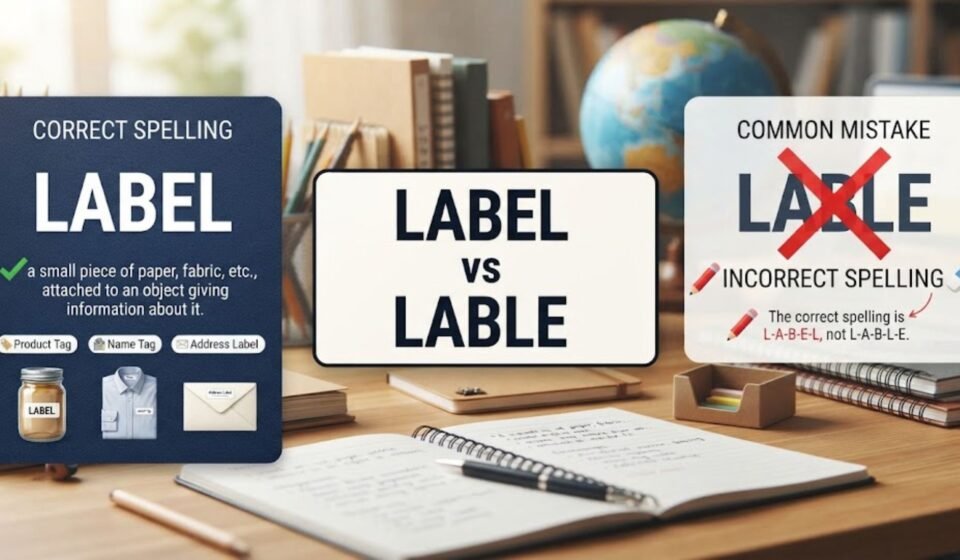
Label is the correct spelling. Lable is not a real word, it’s just a common typo. If you’ve ever paused mid sentence wondering which one to type, you’re not alone. This guide clears up the confusion for good and shows you why the mistake happens in the first place.
Why “Label” Is the Correct Spelling
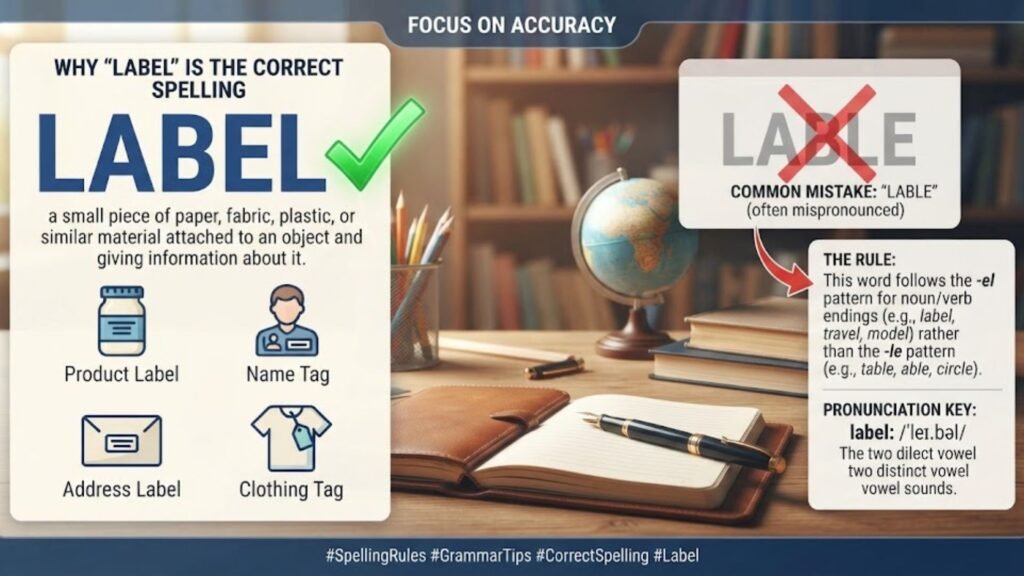
Every major dictionary, including Merriam-Webster Dictionary and Cambridge Dictionary, lists label as the only accepted spelling. It follows normal English spelling patterns, where the “a” comes before the “b” and “e” sits right after it.
Lable simply swaps two letters around. It’s a classic case of letter reversal, something your brain does when it’s moving faster than your fingers.
Correct Usage
Use label whenever you’re naming, tagging, or describing something. It works as both a noun and a verb, so it fits naturally into everyday word usage.
Examples of “Label” in Sentences
- “Check the label before you take the medicine.”
- “She decided to label each folder by date.”
- “The shirt’s clothing label says it needs a cold wash.”
What Does “Label” Mean?
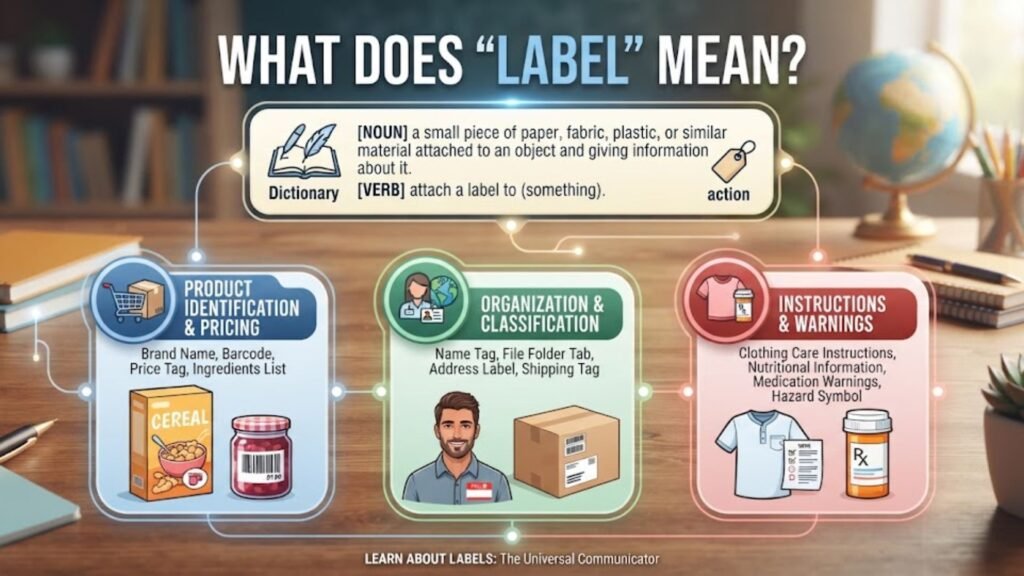
At its core, a label gives information that helps you identify, classify, or categorize something. Think of it as a small note that tells you exactly what you’re dealing with.
The word shows up everywhere, from product packaging to digital organization systems. It’s one of those quiet, useful words you rely on more than you realize.
“Label” as a Noun
As a noun, a label is the physical or digital tag attached to something. A price label, a shipping label, or a food label are everyday examples.
“Label” as a Verb
As a verb, to label means to attach that tag or description. Teachers ask students to label diagrams, and warehouses label boxes before shipping.
Why People Mistakenly Write “Lable”
This spelling mistake isn’t random. A few clear habits push people toward it, and once you spot them, you’ll catch yourself before hitting the wrong keys.
1. Pronunciation Confusion
The way label sounds when spoken quickly can trick your ear. That pronunciation confusion makes the letters feel like they could go either way.
2. Common Letter Reversal
Swapping “a” and “l” is one of the most common typing errors in English. Words with similar sound patterns often get scrambled this way.
3. Fast Typing Errors
Fast typing on phones and keyboards leads to small slips. Your brain knows the word, but your fingers move ahead of it.
4. Influence of Informal Writing
Casual writing, texting, and social posts rarely get proofread. That informal habit sometimes bleeds into professional writing without anyone noticing.
Label vs Lable: Quick Comparison Table
| Spelling | Status | Used In |
| Label | Correct English | Dictionaries, business, education |
| Lable | Incorrect spelling | Typos, fast typing, informal texts |
This table sums up the correct spelling debate in one glance. When in doubt, label is always the safe choice.
How to Remember the Correct Spelling of “Label”
Memory tricks work better than repeating rules in your head. Here are a few that actually stick.
Think of Similar Words
Words like “table” and “cable” follow the same word forms as label. If you can spell those, you can spell this one too.
Break the Word Into Sounds
Split it into “la” and “bel.” Saying it slowly out loud reduces spelling confusion almost instantly.
Use Repetition
Repetition builds spelling memory over time. Write the word a few times a week until it becomes automatic.
Read More English Content
Reading practice exposes you to the correct form naturally. The more you read, the less you second guess yourself.
When Should You Use the Word “Label”?
Label shows up across nearly every field, from shopping to science. Knowing where it fits helps you use it with confidence.
Product Packaging
Think food labels, medicine labels, and nutrition labels. These guide buyers toward safe, informed purchase decisions.
Education and Science
Teachers ask students to label diagrams, charts, and maps. Labeling the parts of the human heart is a classic classroom example.
Technology and File Management
Gmail labels, folder labels, and data labels keep digital life organized. Good digital organization saves time and reduces stress.
Social and Emotional Contexts
People also get labeled in social settings, sometimes unfairly. This ties into psychology and how identity gets shaped by outside opinions.
Common Grammar Mistakes Related to “Label”
Even people who know the right spelling sometimes trip on grammar around this word. Here’s what to watch for.
Incorrect Verb Forms
American English uses labeled and labeling, while British English uses labelled and labelling. Mixing them up is a common grammar mistake.
Using “Lable” in Professional Writing
A typo like this in a resume or business email can hurt brand credibility. Proofreading before you hit send matters more than people think.
Mixing British and American English
Pick one style and stick with it throughout your document. Switching between American English and British English mid page looks careless.
Real-Life Case Study: How a Small Spelling Error Hurt an Online Store
A small eCommerce business selling handmade skincare products once ran an SEO audit after noticing a drop in traffic. The team found “lable” scattered across product descriptions and image alt text.
Customers left comments questioning the brand’s professionalism, and customer trust slipped. After fixing the spelling across every product page, the store saw better product page engagement and steadier search engine rankings within a few weeks.
This wasn’t a huge fix, just a careful one. It shows how content quality and user experience are tightly linked in the eyes of both shoppers and search engines.
2025-2026 Language and SEO Statistics About Spelling Accuracy
Spelling accuracy isn’t just a grammar nitpick anymore, it’s tied to real business outcomes. The numbers back this up clearly.
Key Statistics
Recent writing surveys suggest that pages with frequent spelling errors see noticeably higher bounce rates than clean, well edited pages. Studies on user trust also show shoppers hesitate longer on product pages riddled with typos.
Why This Matters
Search engines increasingly reward content quality and readability as ranking factors. A single spelling error rarely tanks a page, but a pattern of them chips away at website credibility over time.
Label in Different Contexts
Label stretches far beyond dictionaries and grammar guides. It touches marketing, psychology, tech, and classrooms alike.
Marketing and Branding
In branding, a well designed label shapes how customers perceive a company. Packaging design and brand image often live or die by the details on that small tag.
Psychology and Society
In society, labeling people can lead to stereotypes or negative labels that stick unfairly. This kind of social labeling affects confidence and how people see themselves.
Computing and Technology
In computing, software systems use labels to organize everything from files to automation workflows. Google Docs and email platforms rely on labels constantly.
Education
Students across academic writing and assignments use labels to organize diagrams and notes. It’s one of the first grammar tools taught in school.
Easy Step-by-Step Guide to Avoid Spelling “Lable”
Fixing this habit doesn’t take long. Follow these five steps and you’ll stop second guessing yourself.
Step 1: Learn the Correct Version
Commit to label as the only spelling you’ll use. Simple decisions like this remove hesitation fast.
Step 2: Use Spell Check Tools
Tools like Grammarly and Microsoft Editor catch slips before you publish. Let technology do the heavy lifting.
Step 3: Read Before Publishing
Manual proofreading still beats relying only on software. Read your work slowly, out loud if you can.
Step 4: Practice Commonly Misspelled Words
Keep a personal spelling list of words you often get wrong. Review it weekly until the mistakes fade.
Step 5: Read High-Quality English Content
English blogs, books, and articles expose you to correct word forms naturally. Good input leads to good output.
Frequently Confused Words Similar to “Label”
Label isn’t the only word people trip over. Here are a few others that follow the same pattern of common spelling mistake:
- Definitely, not “Definately”
- Receive, not “Recieve”
- Believe, not “Beleive”
- Writing, not “Writting”
- Occurred, not “Occured”
- Environment, not “Enviroment”
Expert Writing Tips for Better English Spelling
Small daily habits build strong writing accuracy over months, not overnight. These five tips work for English learners and professionals alike.
Read Daily
Daily reading trains your eye to catch correct spelling patterns. Even ten minutes a day makes a difference.
Use Writing Tools Carefully
Grammar tools are helpful, but don’t lean on them completely. Understand why a word is corrected, not just that it was.
Slow Down While Typing
Slow typing reduces careless slips caused by rushing. Speed can wait until accuracy feels natural.
Learn Root Patterns
Studying root patterns and English endings helps you predict spelling instead of guessing. It’s a skill that pays off across hundreds of words.
Practice Frequently Misspelled Words
Set aside time for weekly spelling exercises focused on tricky words. Spelling practice compounds over time.
Mini Quiz: Lable or Label
Test yourself with these quick rounds. No pressure, just a fun check.
Quiz 1: Spot the Correct Spelling
Which is right, “lable” or “label”? Answer: Label.
Quiz 2: Real or Misspelling?
Is “lable” a real word? Answer: No, it’s a misspelling.
Quiz 3: Fill in the Blank
“Please ___ the box before shipping.” Answer: label.
Quiz 4: Noun or Verb?
In “label the file,” is label a noun or verb? Answer: Verb.
Quiz 5: Quick Grammar Check
Which is correct, “labelled” or “labeled”? Answer: Both, depending on British English or American English.
Quiz 6: British vs American English
Which spelling does the UK typically use? Answer: Labelled.
Quiz 7: Fast Typing Challenge
Type “label” five times quickly without looking. Did you slip into “lable”?
Quiz 8: SEO Smart Check
Does a spelling error affect SEO performance? Answer: Yes, indirectly through user experience and trust.
Credible External References
For further reading on correct spelling and grammar standards, check the Merriam-Webster Dictionary and Cambridge Dictionary. Both remain trusted, authoritative sources for standard English rules.
Quick Recap: Key Takeaways
Label is always correct, lable never is. The mix up usually comes down to fast typing, pronunciation, or informal writing habits creeping into serious work.
Whether you’re writing a product description, a school assignment, or a business email, getting this word right builds credibility. It’s a small detail that quietly signals professionalism.
FAQs
Q1: Is “lable” ever correct?
No, lable is never correct in standard English. It’s simply a spelling error.
Q2: What is the correct spelling: label or lable?
Label is the only correct spelling accepted by every major dictionary.
Q3: Why do people type “lable”?
Mostly due to letter reversal, fast typing, or pronunciation confusion while writing quickly.
Q4: Is “label” a noun or verb?
It works as both a noun and a verb, depending on the sentence.
Q5: What is the British spelling of label?
The base word stays label, but verb forms shift to labelled and labelling in British English.
Q6: Does spelling affect SEO?
Yes, spelling ties into content quality and user experience, both of which influence search engine rankings.
Q7: How can I remember the correct spelling?
Break it into sounds, compare it to words like “table,” and practice through repetition and reading practice.
Conclusion
Label, not lable, is the spelling you want to remember. It’s a small word, but it carries real weight across product packaging, academic writing, branding, and everyday communication.
Fixing this one habit takes a little attention, not a total overhaul. Read a bit more, slow down when typing, and let tools like Grammarly back you up. That’s really all it takes to get it right every single time.

Henry Parker is an English language writer with several years of experience helping learners understand grammar and improve their writing. He enjoys breaking down confusing grammar rules into simple explanations and practical examples. Through his work at HexoWaves, Henry shares useful tips on grammar, vocabulary, sentence structure, and everyday English.